Fish You Can Learn to Spot
Hawai’i Sea Grant’s Hanauma Bay Interactive Reef documents many of the animals visitors may see. The list below focuses on fish with strong visual clues that are useful to casual snorkelers.
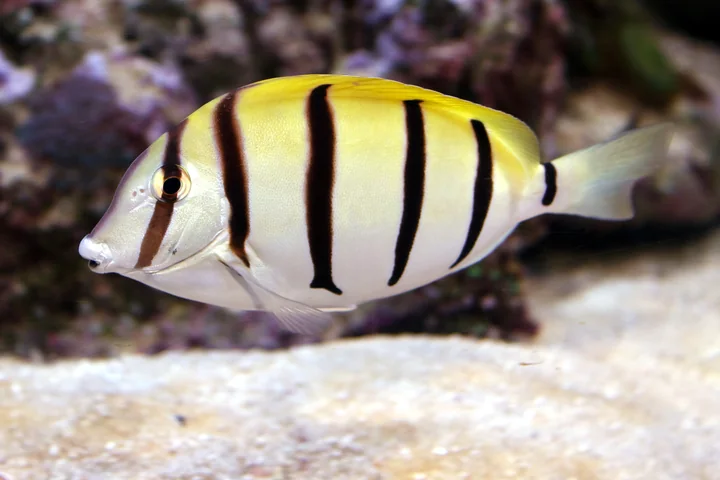
Convict Tang
Pale body with bold dark vertical bars. Manini often graze algae across shallow reef flats and may move in schools.
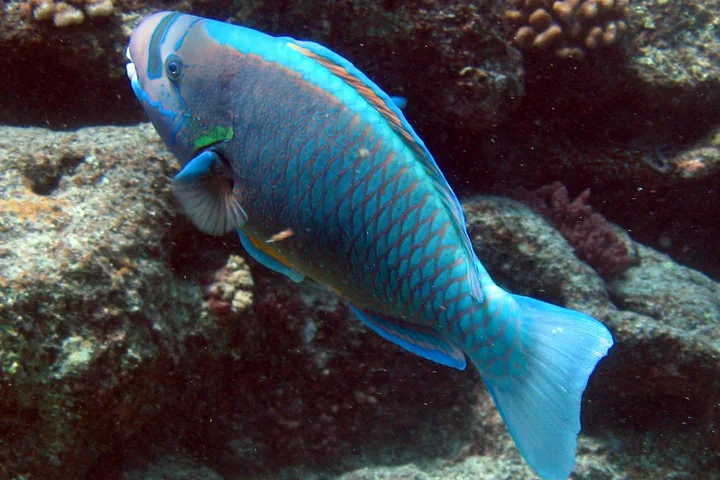
Parrotfish
Large reef grazers with beak-like teeth. Colors vary by species, sex and life phase; this photo shows a spectacled parrotfish.
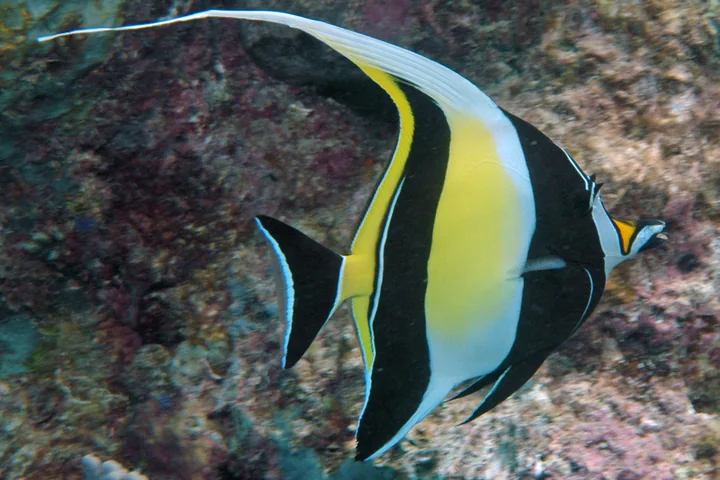
Moorish Idol
A deep, triangular fish marked with black, white and yellow bands. The long white dorsal streamer is its clearest feature.
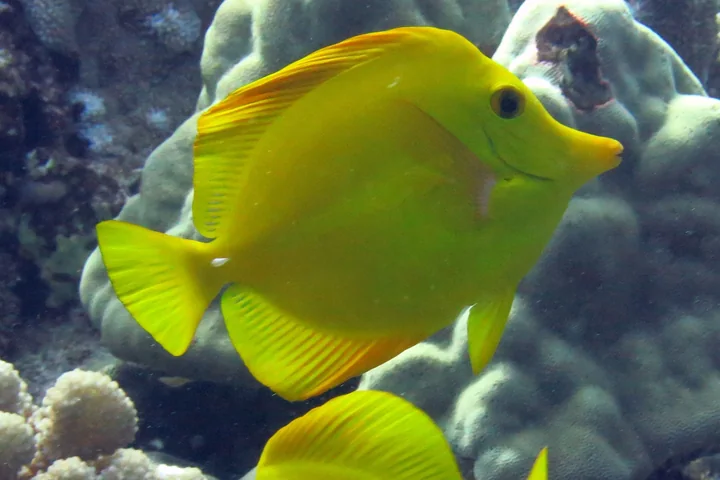
Yellow Tang
A bright yellow, oval surgeonfish with a pointed snout and a small white spine near the base of the tail.
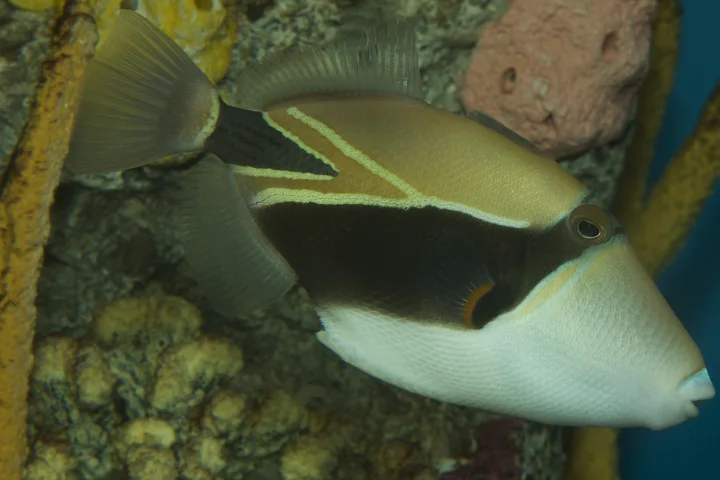
Reef Triggerfish
An angular fish with strong black, white and tan markings and a narrow mouth. Nesting fish can defend their area.
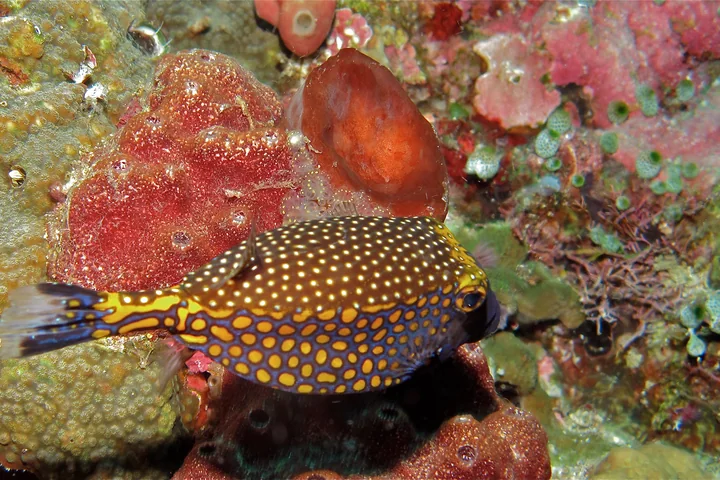
Spotted Boxfish
A rigid, box-shaped fish covered in spots. Adult males and females can look very different, so shape is often the best clue.
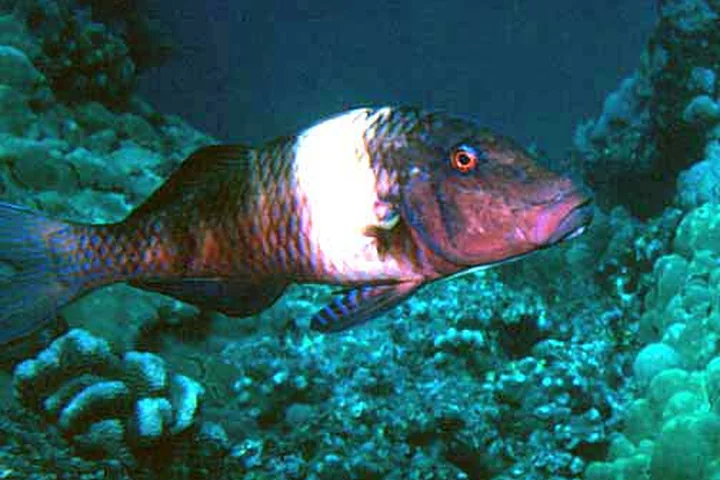
Manybar Goatfish
A bottom-searching fish that may appear gray, reddish or purple. Goatfish use chin barbels to probe sand and reef crevices.
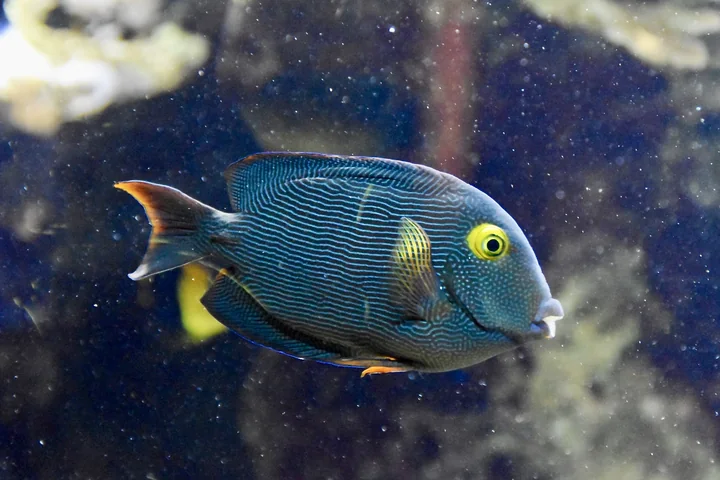
Goldring Surgeonfish
A dark Hawaiian surgeonfish with fine horizontal lines and a bright yellow ring around the eye.
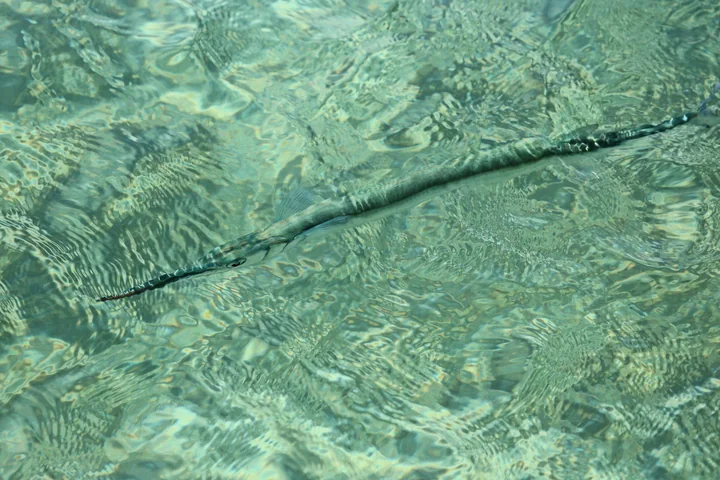
Keeltail Needlefish
A very long, pencil-thin surface fish with narrow jaws. It can be easy to miss because its silver-green body blends with rippled water.
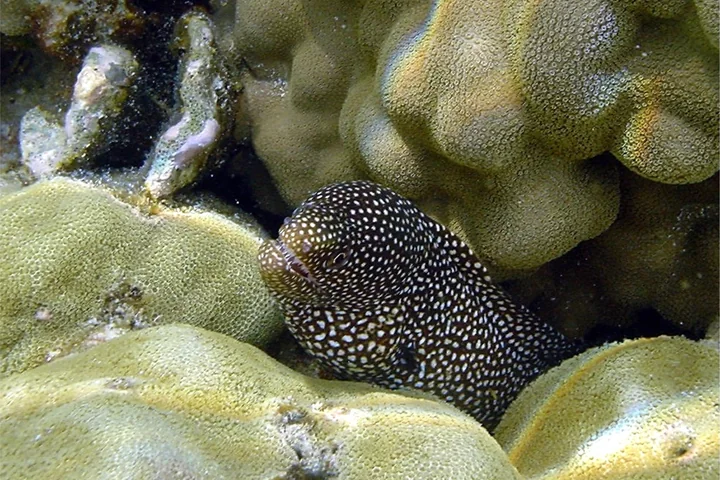
Moray Eel
Morays usually keep most of their long body inside reef holes. Repeated mouth opening helps move water across the gills.
Fish image credits and licenses
Manini: Brian Gratwicke, Wikimedia Commons, CC BY 2.0.
Uhu example: Dr. Dwayne Meadows / NOAA, Wikimedia Commons, public domain.
Kihikihi: Leonard Low, Wikimedia Commons, CC BY 2.0.
Lau’ipala: Kevin Lino / NOAA Photo Library, Wikimedia Commons, CC BY 2.0.
Reef triggerfish: Brian Gratwicke, Wikimedia Commons, CC BY 2.0.
Moa: Bernard DUPONT, Wikimedia Commons, CC BY-SA 2.0.
Moano: Bryan Harry / National Park Service, Wikimedia Commons, public domain.
Kole: NasserHalaweh, Wikimedia Commons, CC BY-SA 4.0.
‘Aha: Paul Harrison, Wikimedia Commons, CC BY-SA 4.0.
Puhi: Brocken Inaglory, Wikimedia Commons, CC BY-SA 3.0.
Images were cropped and optimized for this guide. Each image remains available under the license stated above.
How to Identify Fish Faster
1. Body Shape
- Oval tang or surgeonfish
- Long needlefish or trumpetfish
- Box-shaped boxfish
- Deep triangular Moorish idol
2. Pattern
- Vertical convict-tang bars
- Yellow tang’s solid color
- Triggerfish geometric markings
- Boxfish spots
3. Behavior
- Algae grazing
- Schooling over reef
- Bottom searching
- Hiding in crevices
Where Fish Gather
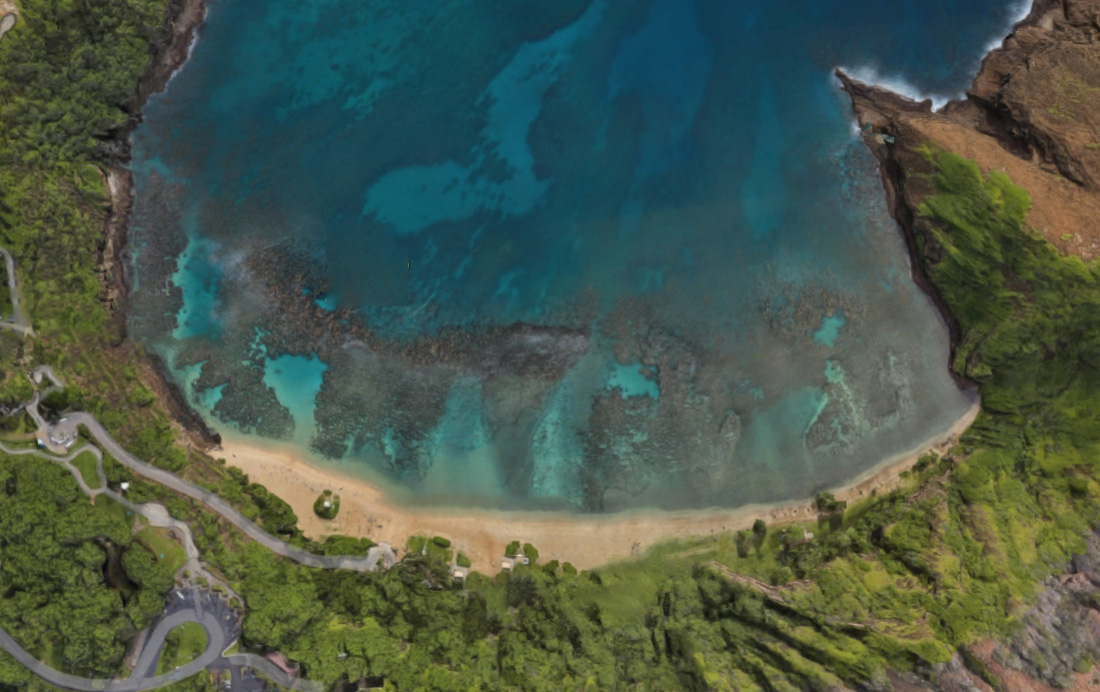
Reef edges are productive
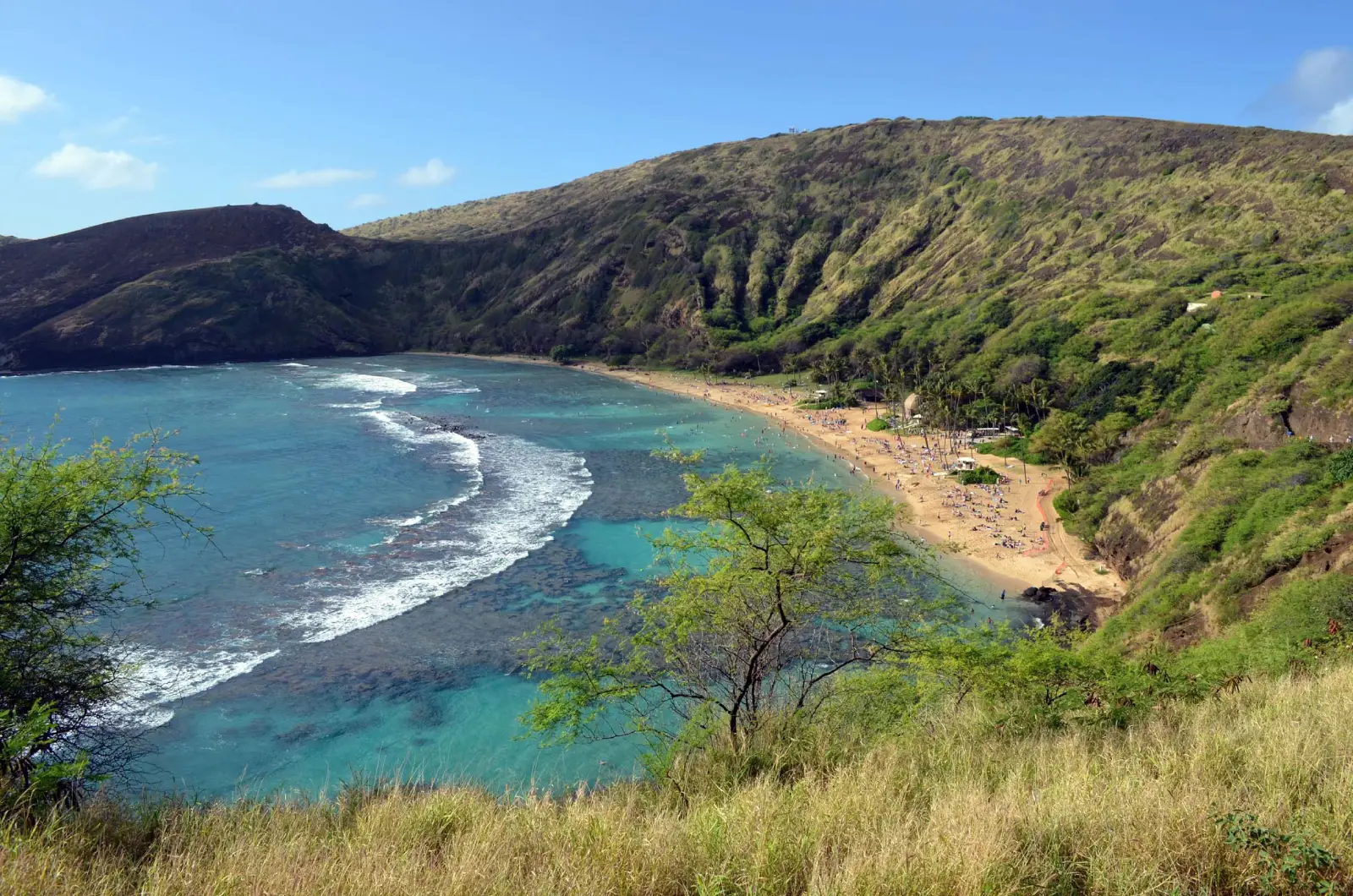
DLNR notes abundant fish along reef edges around sandy-bottomed areas. The shallow reef flat extends offshore with several large sandy openings, creating easy-to-read habitat boundaries.
Look along the edge without drifting onto shallow coral. Fish may also use the sand, surface water and reef crevices depending on species.
Learn Families, Not Just Species
Once you recognize the major reef-fish families, individual species become easier. Hawai’i’s Marine Life Conservation Districts support many wrasses, butterflyfishes, tangs and surgeonfishes. At Hanauma Bay, the protected setting also allows visitors to observe natural feeding and schooling behavior at close range without fishing pressure.
Best Time for Fish Watching
DLNR says underwater visibility is usually best at low tide and early in the day, before sediment is kicked up by snorkelers. Morning conditions can also be favorable for snorkeling, though ocean conditions always matter more than the clock.
Watch Natural Behavior
Do not feed fish to bring them closer. Feeding or attracting marine life is prohibited in the Hanauma Bay Marine Life Conservation District. Do not touch fish, coral, eels or other animals, and do not collect anything from the reef.

Use the official educational resources
Hawai’i Sea Grant publishes a 65-page waterproof Snorkeler’s Guide to the Fishes of Hanauma Bay and an interactive reef with species profiles.
For families, Sea Grant also offers a printable Hanauma keiki field guide for observing marine life and the natural environment.
FAQs
What fish are easiest to recognize at Hanauma Bay?
Manini (convict tang), yellow tangs, Moorish idols, parrotfish, triggerfish and boxfish all have strong shape or pattern clues that make them useful starting points.
Where should I look for fish?
DLNR notes abundant fish around reef edges surrounding sandy-bottomed areas. Stay within safe depth and avoid standing on or kicking coral.
When is visibility best?
DLNR says visibility is usually best at low tide and early in the day before sediment is stirred up by snorkelers.
Can I feed fish so they come closer?
No. Introducing food or another substance to feed or attract marine life is prohibited in the Hanauma Bay Marine Life Conservation District.
Is there an official fish guide?
Hawai’i Sea Grant publishes a waterproof Snorkeler’s Guide to the Fishes of Hanauma Bay and an online interactive reef.
Source Notes
Species descriptions are based on the Hanauma Bay Interactive Reef and Hawai’i Sea Grant fish guide. Habitat and visibility guidance comes from Hawai’i DLNR.