Why It Is Different
A Protected Reef
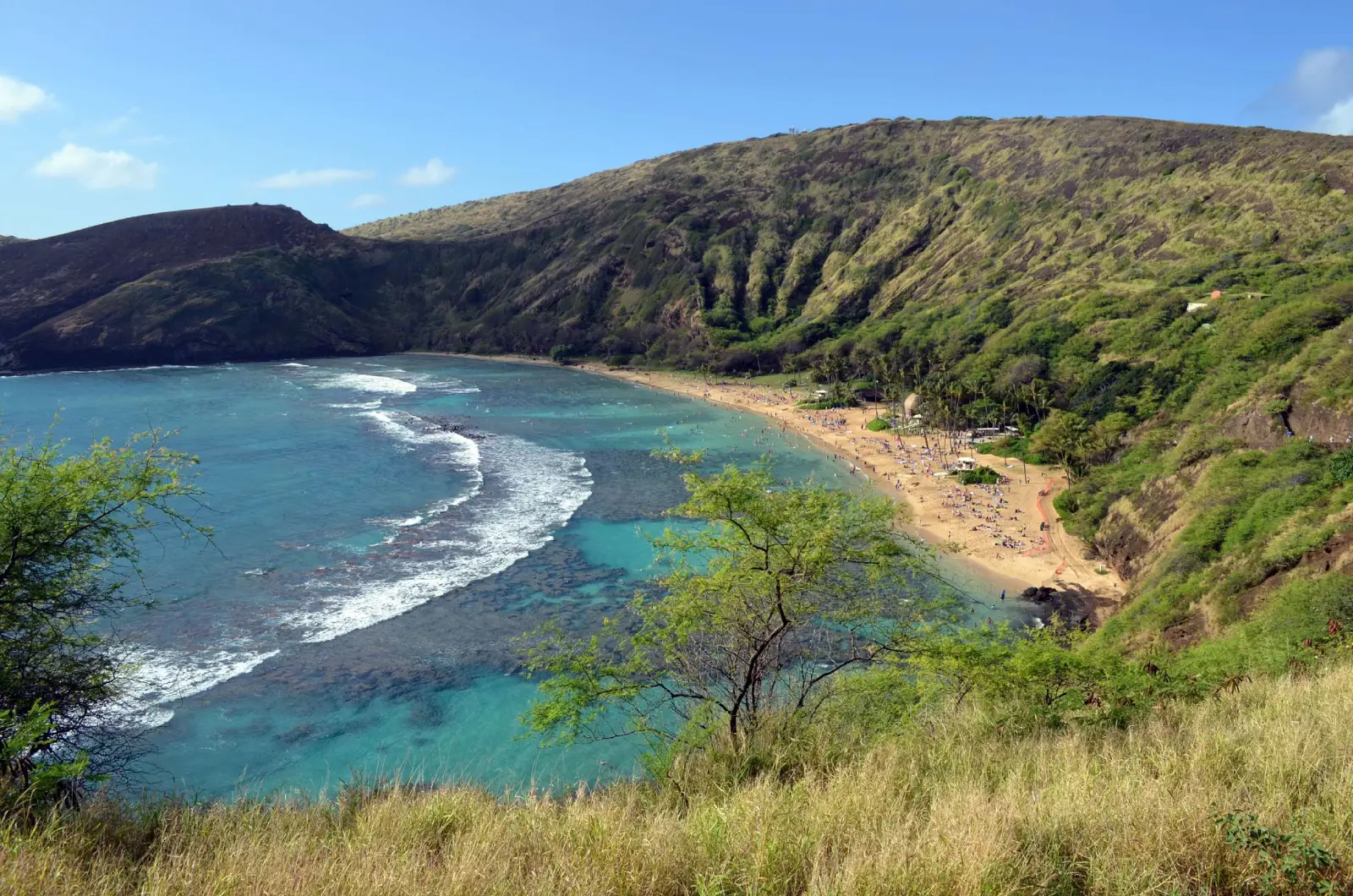
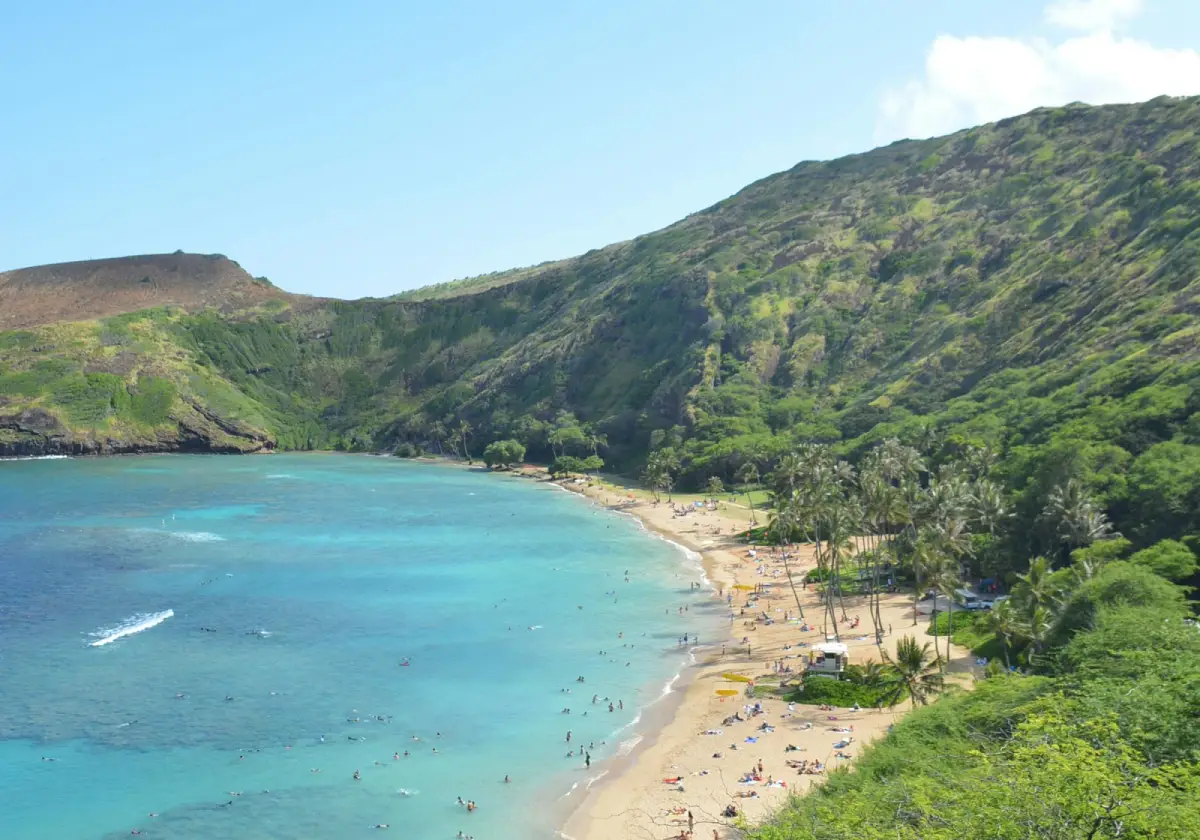
Hanauma Bay became Hawai’i’s first Marine Life Conservation District in 1967. The no-take protection gives fish and other reef life room to grow, feed, and reproduce.
DLNR describes Marine Life Conservation Districts as places where fish are often less fearful of people. At Hanauma Bay, that can make close viewing possible without feeding or chasing animals.
State biologists have surveyed the bay since 1969, and DLNR has described Hanauma Bay as having the largest biomass of reef fish around O’ahu.
Common Groups
Fish You May See
No single species is guaranteed. These are useful groups to recognize because they are widely associated with Hawaiian reefs and are represented in Hanauma Bay education materials.
Butterflyfish
Often recognized by flat bodies, strong bands, and yellow, white, or black patterns. Look near reef surfaces and coral structure.
Tangs and Surgeonfish
These algae grazers may appear alone or in groups. Convict tangs, called manini, are easy to notice by their dark vertical bars.
Parrotfish
Uhu use beak-like teeth to graze reef surfaces. Their colors and markings can change as they grow, making identification challenging.
Wrasses
Wrasses come in many sizes and colors. They often move quickly over the reef while searching for small animals and food.
Goatfish
Look for the pair of feeler-like barbels under the chin. Goatfish use them to search sand and rubble for hidden food.
Triggerfish
The reef triggerfish, humuhumunukunukuapua’a, is one of several triggerfish featured in Hanauma Bay education resources.
Light, depth, age, and behavior can change how a fish looks. Body shape, stripes, tail shape, mouth position, and feeding style are often better identification clues.
Honu
Green Sea Turtles
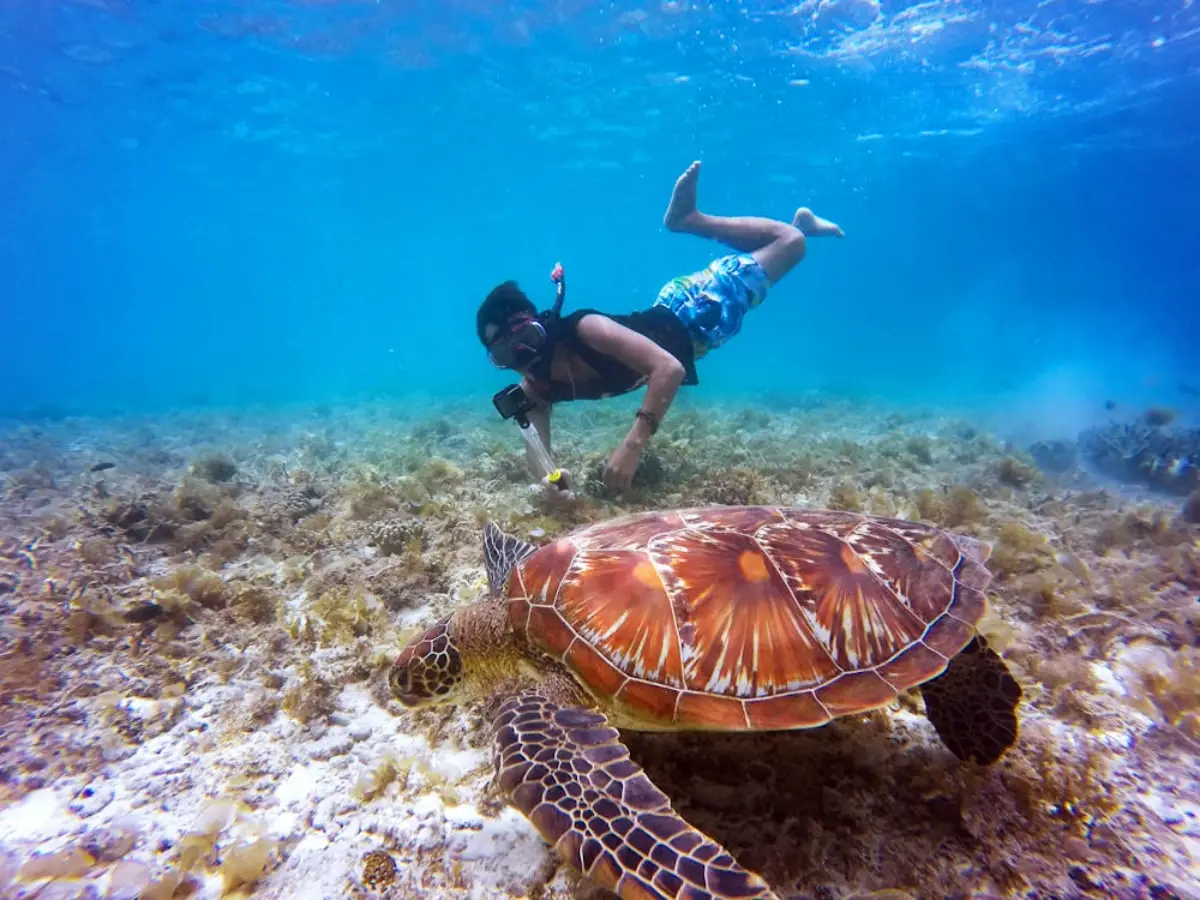
Green sea turtles may visit Hanauma Bay to feed or travel across the reef, but a turtle sighting is never guaranteed.
Do not swim directly toward a turtle, follow behind it, block its route, or crowd it at the surface. NOAA recommends staying at least 10 feet, or 3 meters, away in Hawai’i.
If a turtle changes direction, speeds up, stops feeding, or rises around you, increase your distance and leave a clear path.
Look Closely
More Than Fish
The reef is a community, not a fish display. Slower observation reveals animals and living surfaces that are easy to miss while swimming quickly.
Sea Urchins
Urchins often shelter in reef holes and crevices. Their spines can injure bare feet or hands, so never reach into spaces or stand on reef.
Octopus
Octopus may blend into rock and rubble using color and texture. A moving eye, changing skin, or carefully arranged shells can reveal one.
Moray Eels
Morays spend much of their time inside crevices. Keep hands out of holes and never try to make an eel emerge.
Coral and Algae
Coral colonies create habitat, while algae support grazing fish and turtles. Some reef surfaces that look plain are biologically active.
Where to Look
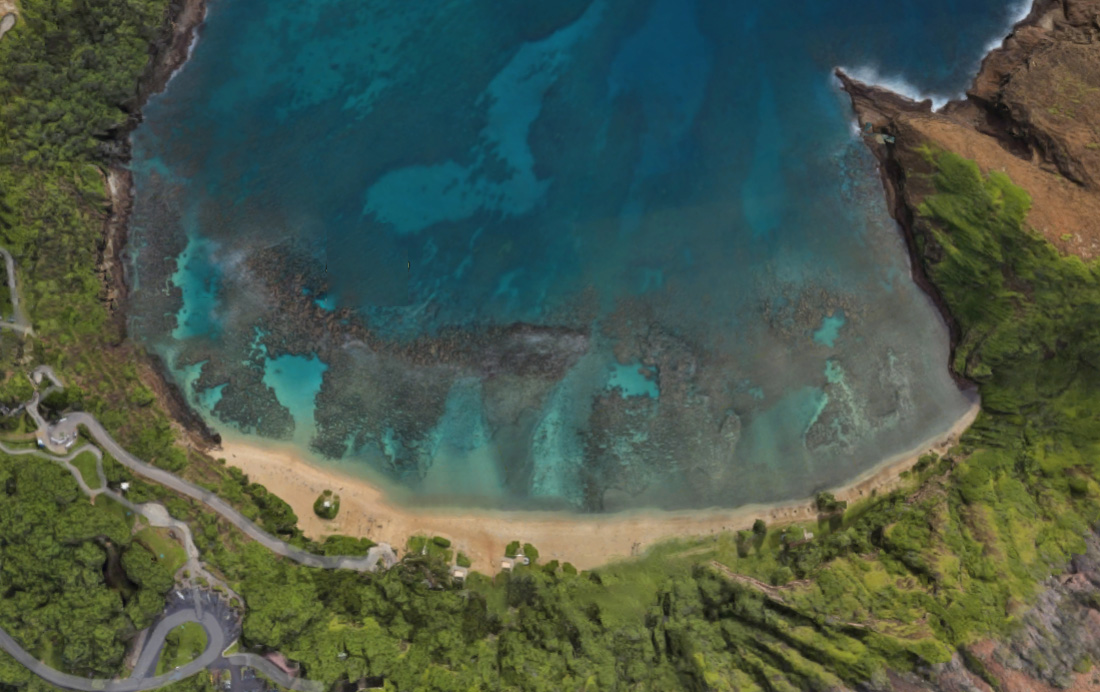
Three Reef Habitats
Different animals favor different parts of the bay. Conditions and swimmer ability must always decide where you go.
Better Wildlife Viewing
Slow Down and Observe
Use slow kicks and turn away from shallow reef.
Feeding changes behavior and is prohibited.
Do not surround turtles, seals, fish, or eels.
Do not remove coral, shells, sand, rocks, or animals.
Set Expectations
What the Bay Is Really Like
Reasonable Expectations
You may see several reef-fish groups close to shore, observe feeding behavior, and occasionally encounter a green sea turtle in clear, calm conditions.
What Is Not Guaranteed
Turtles, perfect visibility, calm water, large schools, or vivid coral gardens are never assured. Weather, tide, season, time, and human activity all affect the experience.
Hanauma Bay is best appreciated as an accessible protected ecosystem, not as an aquarium where animals appear on demand.
Why Protection Works
Conservation in Action
No Taking
Fishing, injuring, or removing marine life is prohibited inside the conservation district.
No Feeding
Food and other substances cannot be introduced to attract marine animals.
Visitor Education
The required orientation connects beach access with reef behavior and current safety guidance.
Managed Access
Reservations, limited parking, opening days, and closures reduce pressure on the preserve.
Long-Term Research
Scientists monitor fish populations, coral condition, water quality, and visitor effects.
Quick Answers
FAQs
What fish are common at Hanauma Bay?
Visitors may encounter butterflyfish, tangs and surgeonfish, parrotfish, wrasses, goatfish, triggerfish, and other Hawaiian reef species. Exact sightings vary.
Will I see a sea turtle?
Green sea turtles may visit the bay, but sightings are never guaranteed. Stay at least 10 feet away and never follow, touch, or block a turtle.
Is the coral healthy everywhere?
No. The reef includes living coral, algae-covered rock, rubble, sand, and areas affected by past human use and environmental stress.
Can I feed fish to bring them closer?
No. Feeding or attracting marine life with food or another substance is prohibited inside the conservation district.
Why do some fish seem unafraid?
DLNR notes that fish in many Marine Life Conservation Districts are relatively tame because consumptive uses are limited or prohibited.
When is marine life easiest to see?
Visibility and conditions are often better earlier in the day, but weather, surf, tide, and water clarity matter more than the clock alone.
Can I touch an urchin, eel, or octopus?
No. Keep hands out of holes and observe every animal without touching, chasing, lifting, or forcing it to move.
Where can I learn fish names?
Hawai’i Sea Grant publishes Hanauma Bay fish resources, including an interactive reef and a dedicated snorkeler’s fish guide.
Verified Guidance
Source Notes
- Hawai’i DLNR: Hanauma Bay Marine Life Conservation District
- Hawai’i DLNR: how Marine Life Conservation Districts work
- Hawai’i DLNR: 50 years of Hanauma Bay conservation
- Hawai’i Sea Grant: Hanauma Bay Interactive Reef
- Hawai’i Sea Grant: Snorkeler’s Guide to the Fishes of Hanauma Bay
- NOAA Fisheries: Hawai’i marine wildlife viewing
Keep Exploring