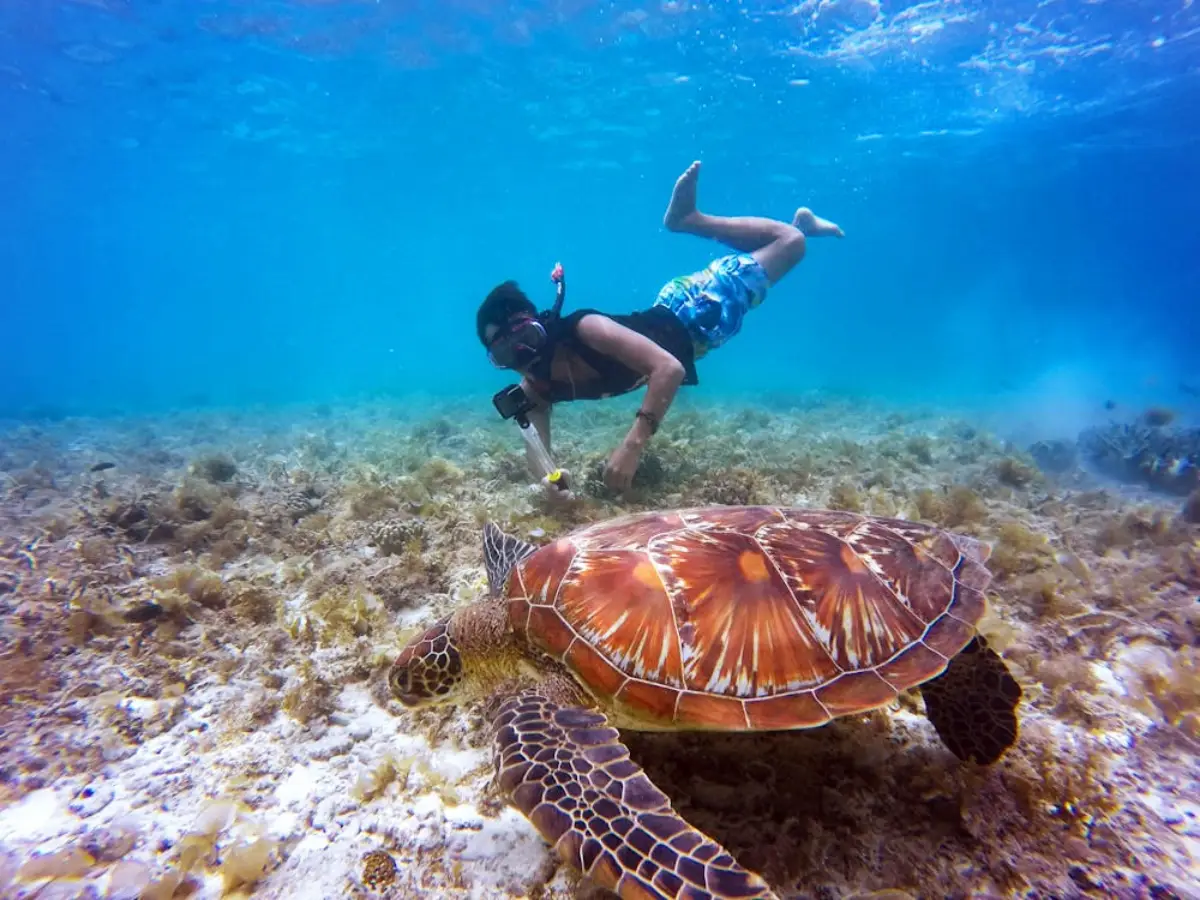
Honu at Hanauma Bay
Hanauma Bay’s protected reef supports a wide range of marine life. Hawai’i Sea Grant identifies the green sea turtle, or honu, as part of the bay’s wildlife, while Hawai’i DLNR notes that turtles are fairly common in deeper reef areas.
Look for movement, not a guaranteed spot
Turtles may cruise above reef, feed on algae, surface to breathe, or pass through sandy openings. They can appear close to shore or farther across the reef depending on conditions and their own behavior.
Do not swim toward deeper water just because someone reports seeing a turtle there. DLNR recommends the outer bay only for experienced divers.
Give Turtles Space
NOAA Fisheries recommends staying at least 10 feet, or 3 meters, from sea turtles in Hawai’i, both on land and in the water. Treat that distance as a minimum buffer, not a target to close in on.
Do
- Stay at least 10 feet away
- Remain calm and move slowly
- Let the turtle swim away freely
- Take photos from a distance
- Back away if your path converges
Do Not
- Touch or ride a turtle
- Chase it for a photo
- Block its path to the surface
- Feed or attract it
- Surround it with a group
Best Viewing
- Keep your body horizontal
- Watch without splashing
- Use zoom instead of swimming closer
- Give resting animals extra room
- Follow lifeguard instructions
What Turtles Are Doing
Where You May See Them
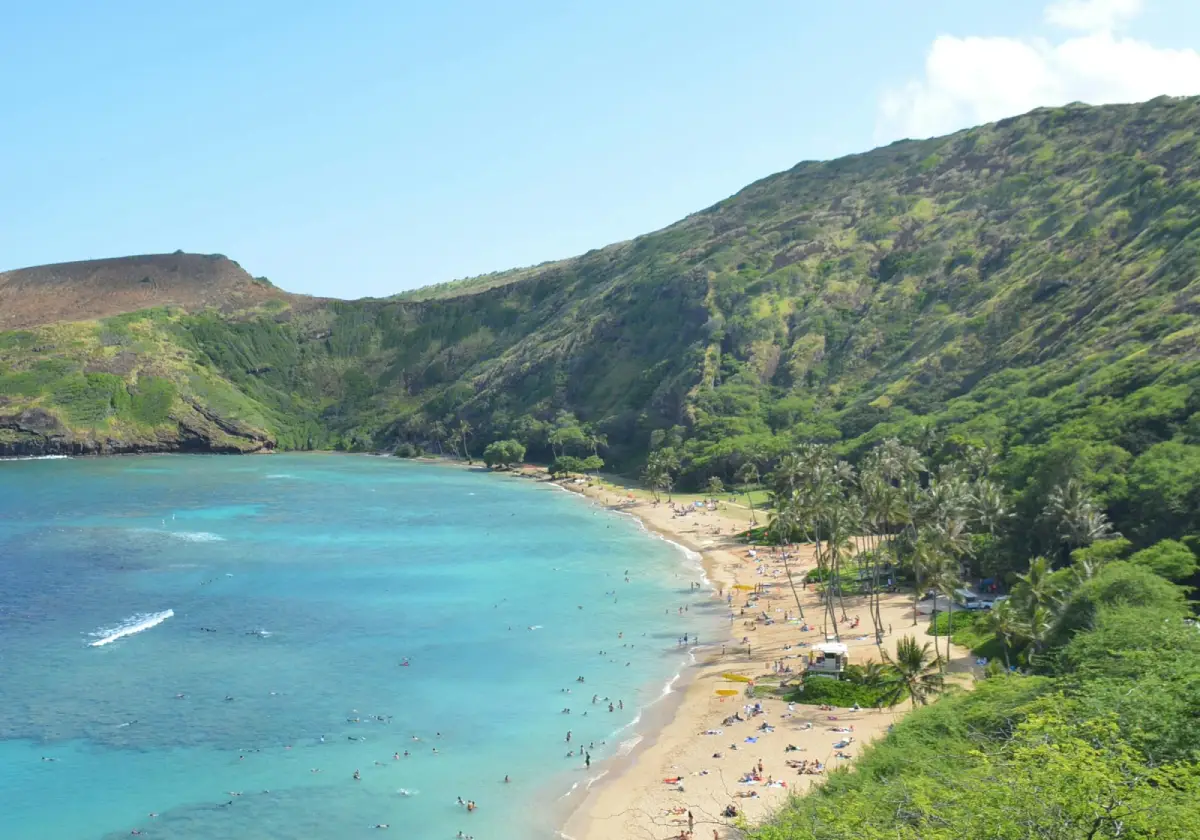
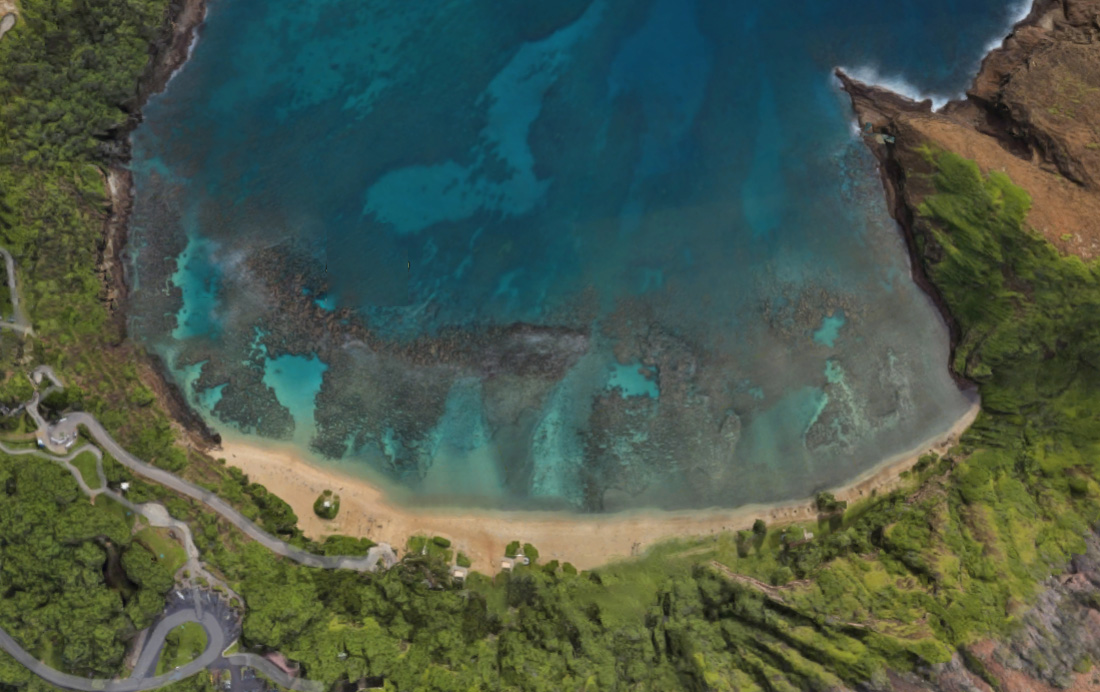
Hanauma Bay has shallow reef flats, sandy-bottomed openings, reef edges, coral beds and a deeper outer bay. DLNR specifically notes turtles in the coral-bed area beyond the shallow fringing reef. That does not mean visitors should pursue them there.
Stay within your own safe snorkeling zone
Beginners should stay in manageable near-shore water and allow wildlife to come into view naturally. More distant reef areas include stronger currents and deeper water.
Green Turtle or Hawksbill?
The turtle most visitors associate with Hanauma Bay is the Hawaiian green sea turtle. Hawksbill turtles also occur in Hawai’i but are much rarer. Do not use a close approach to identify a turtle. Body shape, shell pattern and head profile can be observed from a responsible distance.
Better Turtle Photos
The best turtle image is one that does not change the animal’s behavior. Stay back, use optical or digital zoom, avoid blocking the turtle against reef or shore, and never ask another swimmer to herd it toward the camera.
FAQs
Are sea turtles guaranteed at Hanauma Bay?
No. Green sea turtles use Hanauma Bay, but they are wild animals and sightings vary by day, conditions, location and animal behavior.
How close can I get to a sea turtle in Hawai’i?
NOAA Fisheries recommends remaining at least 10 feet, or 3 meters, away from sea turtles in Hawai’i on land and in the water.
Can I touch a turtle if it swims close to me?
No. Stop moving toward it, keep your hands to yourself, and give the turtle room to pass.
Where are turtles seen at Hanauma Bay?
They can move throughout suitable reef habitat. DLNR notes turtles in coral-bed areas beyond the shallow fringing reef, but visitors should stay within conditions and depths appropriate for their ability.
Should I follow a turtle for photos?
No. Following or surrounding a turtle can change its behavior. Use zoom and let the animal choose where it goes.
What if I see an injured or entangled turtle?
Keep your distance and report the animal through NOAA Fisheries’ Hawai’i marine wildlife reporting channels rather than attempting a rescue yourself.
Source Notes
Wildlife guidance is based on NOAA Fisheries marine-life viewing guidance, the Hawai’i DLNR Hanauma Bay page, and the Hawai’i Sea Grant Hanauma Bay Interactive Reef. Conditions and wildlife sightings can change.